Why User Experience (UX) Can Make or Break an Ecommerce Business
What is user experience, and why should I care about it? We break down detailed definitions of the concept and explore the reasons why ecommerce businesses should work to improve theirs
 Volusion

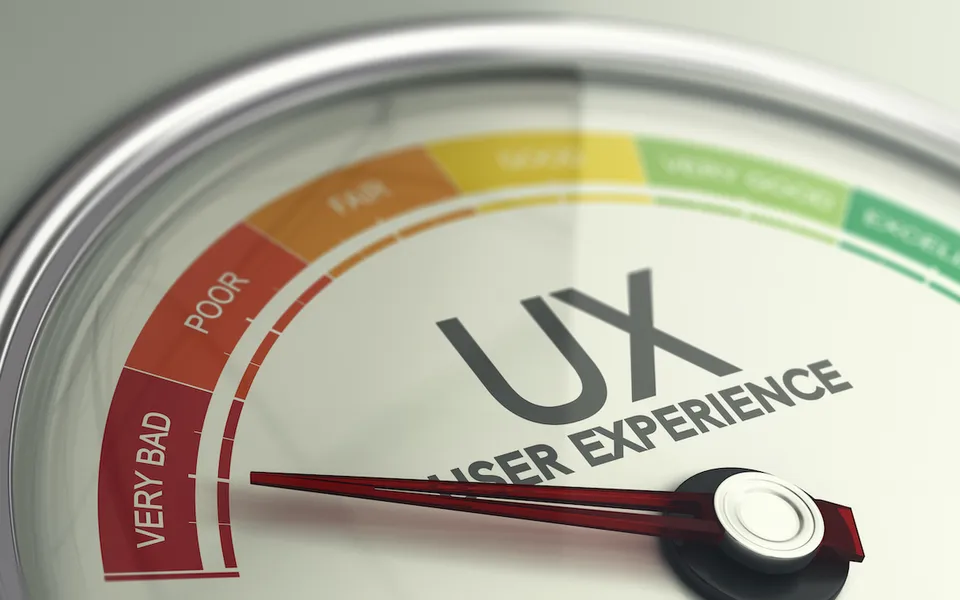
A website’s user experience (UX) is often mistakenly simplified to mean "how easy it is to use a website." However, this definition describes only one of the many facets of UX. Instead, UX can more accurately be described as what it sounds like: an experience. And as an experience, it encompasses every single part of a website and how a user interacts with it. Great UX results in a website that is polished, detailed, highly satisfying for its users, and—when it comes to ecommerce sites—as profitable as possible.
Ecommerce UX has a lot in common with general website UX; however, ecommerce UX has many unique aspects as well, like product pages and checkout pages. It's these unique ecommerce UX elements that can make all the difference between a good online store and an incredible one. How? Let’s dive in.
What is UX?
UX is a constantly developing field, and as such, many definitions have cropped up (and are still cropping up) to try and explain it. To cut down on the abundance of material trying to define what UX is, we'll look at two of the most encompassing and relevant definitions specific to ecommerce.
The “Usability Body of Knowledge” Definition
First, let's examine the Usability Body of Knowledge's definition of UX. To better apply it to ecommerce, we'll break this definition down a bit. Starting with the first sentence…“Every aspect of the user's interaction with a product, service, or company that make up the user's perceptions of the whole.”…we can define ecommerce UX as "every aspect of the user's interaction with an ecommerce website, which together make up the user's perceptions of the business as a whole." So when judging the quality of your store's UX, you'll be looking at anything your customers can see or click, and studying how they react to it.
But saying we should look at anything a customer can see is casting an incredibly wide net. Using the definition's second sentence…“User experience design as a discipline is concerned with all the elements that together make up that interface, including layout, visual design, text, brand, sound, and interaction.”…let's organize your store's interface into the smaller, more specific groups that the definition lists:
- The layout of your website is how elements are presented on a web page. This includes everything from where your navigation menu is, to whether you display your products in a grid or list format, and even how you list the information in your footer.
- Visual design refers to the images and colors used on your website. If you're using a template, that makes up the majority of your visual design. However, small details like making a CTA button red or changing your headline font are also included in this group.
- Text is just another word for your written copy. Not only does this refer to big blocks of copy like the ones you'd find in your About Us page, but also the names of your products, product descriptions, and even labels of buttons in your navigation menu.
- Brand refers to your business’s overall persona, vision, values, and how they all come across in your online store. It also refers to how consistent this information is from page to page and medium to medium.
- Sound is the audio component, which doesn’t readily apply to most ecommerce websites. However, aspects like volume control and sound quality would be good things to consider if you stream or sell music as a part of your online business.
- Interaction is when your customers come into contact with your website, what actions they take once there, and how your website responds to said actions. Everything from clicking a button to navigating your site to filling out a form falls under this category.
This leads us into this definition’s third and final sentence…“U[X] works to coordinate these elements to allow for the best possible interaction by users.”…which tells us that UX combines these six areas that a customer sees, uses, and reacts to into a positive interaction and perception (when approached correctly).
UX Expert Frank Guo’s Definition
If you’re inclined to more abstract ways of thinking, we have a second definition of UX for you. According to Frank Guo, a well-respected UX strategist and architect, there are four major elements of UX: usability, value, adoptability, and desirability. They're distinct but cooperating entities that are all needed to have the best UX possible. Let's briefly look a little closer at each component, and how it relates to your ecommerce site.
- Usability: how easily a user can complete a task on your website. Examples include making it very simple to purchase products, putting your contact info in an obvious location, and making sure your content is easy to read.
- Value: how well your ecommerce site satisfies your customers' needs. For example, if your customer is a beginner fisherman and your store includes basic rods, accessories, and helpful get started guides, the value of your store would be higher.
- Adoptability: how easy it is to access your ecommerce site, and how well it can adapt to different mediums. An example would be if your website is easily accessible, well-structured, and pleasant to use across desktop, mobile, and tablet.
- Desirability: how appealing, engaging, and pleasant your ecommerce site is to customers. An example would be if your online store has a well-done and relevant template, and uses a brand voice that makes your customers smile.
UX is a multi-faceted, ever-evolving field, especially since it's so closely tied to the advancement of technology. But with these two definitions on our side, we can better understand UX and what it means to improve it in your ecommerce website.
Why is UX important?
Investing in your ecommerce site’s UX has a host of benefits that help both your store and your customers. When your store's UX is optimized, it helps you stand out from the competition, leading to improvements in customer satisfaction & loyalty, efficiency, and conversion & ROI. Let's delve a little further into each of these benefits to understand how.
Sets your business apart
We all know that competition is high online—and with tons of new ecommerce websites being published every day, it's only getting worse. Today's online consumer is well aware of their multitude of choices, which makes them very likely to shop around before deciding where to put their money. This means that to grab customers' attention, you'll need more than just stellar design or good products: you'll need to create an online shopping experience that is second-to-none.
How does your online business achieve that? By improving your UX. When your business focuses on creating a specific shopping experience for your customers, your entire approach to your business will end up having that big-picture, holistic perspective that will put it miles ahead of the others.
Boosts customer satisfaction & loyalty
Believe it or not, you can actually make your customers happy just by having a user-friendly website. Online shopping is becoming an increasingly popular stress-reliever, especially with the abundance of pandemic-related shutdowns. When you're able to deliver exactly what your customer wants in a fun and engaging way, they'll make their purchase with a smile instead of frustration.
By its very nature, your ecommerce website has been bestowed with all the advantages of the internet, like speed, efficiency, and convenience (which, incidentally, are all things customers look for in their shopping experiences). Thus, good UX is critical. By making your site intuitive to use, you’re reducing obstacles that deter the purchase process while helping boost positive associations with your ecommerce site. Plus, when a customer is satisfied with their experience, it builds customer loyalty to your brand, which gives you more revenue—and helps you save on acquiring new customers.
Creates efficiency and productivity
In a world where time is money, the more efficient your ecommerce website, the better. As a general rule, good UX helps your business be more agile. When your online store is easy to use, your customers can do everything faster, including browsing and buying products. This means that they can get in and out, so to speak, as quickly as possible.
Think of it this way: the faster a task is, the less time it takes. The less time it takes, the more you can get done. Likewise, when you make it easy and quick to buy products, you're opening up the opportunity for more purchases to happen in a day.
Increases conversion rates and return on investment
Good UX pays off largely because an ecommerce website with good UX makes it easy for shoppers to search, access, and purchase its products. When users can easily find and buy products, your online store is better equipped to turn browsers into buyers. Furthermore, as mentioned earlier, customers who become loyal to your brand will often return to buy more of your wares—meaning an even greater profit for your business.
Of course, you'll also want to make enhancements to your ecommerce store at some point. Whether you invest in a custom design or search engine optimization, poor UX could work against—or even negate—these improvements. To get your money's worth, you need your site's UX to be at its best so it won't distract from these investments.
Final Thoughts
Ecommerce websites can greatly benefit from paying attention to their UX, and making sure their layout, design, text, brand, sound, and interaction are as user-friendly as possible. By being usable, valuable, adaptable, and desirable, online stores and their customers reap a number of benefits that help both the business and the consumer.
Check out our other UX blog posts, including our tips for assessing your ecommerce site's UX, best practices for maintaining great UX, and features that improve UX on your site.